
WorkSafe Events In Your Area During Safety Month October 2024
admin • October 2, 2024
It's officially Health and Safety Month, making this the ideal moment to enhance your workplace safety! Gain new skills, knowledge, and tools to create a safer environment. Whether you’re an employer or an employee, WorkSafe has an event just for you.
View all events and register today at worksafe.vic.gov.au/events

At BeSafe Victoria, we offer four different HSR Refresher OHS Training Courses. All of them are WorkSafe approved courses. Here is what you can expect from the 4 topics… These WorkSafe-approved HSR refresher OHS training courses aim to provide you with the skills and knowledge needed to raise, and contribute to the resolution of, health and safety issues arising from exposure to 4 different groups of hazards: Plant During this program you will refresh your knowledge of: The legislative framework and the role of HSRs Designated work groups and HSR powers Risk Management How to apply the risk management cycle to risks associated with Plant Issue resolution procedures Provisional Improvement Notices Psychological Health During this program you will refresh and update your knowledge by: Understanding psychological health Identifying psychosocial hazards Knowing legal duties Understanding HSR roles and powers Applying risk management processes Assessing psychosocial risks Controlling and reducing risks Resolving workplace issues Using prevention plans and supports Gendered violence During this program you will refresh your knowledge of: HSR rights and powers under the OHS Act Gendered violence definitions and workplace examples How to identify these hazards and risks in the workplace How to address work-related gendered violence as a health and safety issue Aggression or Violence During this program you will refresh your knowledge of: The risks associated with work-related aggression and violence How to identify, prevent and control these hazards The legislative framework, legal duties and requirements Understand HSR roles and powers Risk Management Incident Investigations Audience: Although HSRs are the primary audience, managers, supervisors, health and safety committee members and anyone with an interest in health and safety may also benefit from attending this course. NB: Under the OHS Act 2004 (section 67), all elected HSRs and deputy HSRs, after completing an initial course of training, have an entitlement for each year they hold office to attend a WorkSafe-approved HSR refresher OHS training course. An employer, if requested, must allow the HSR/Deputy HSR to attend on paid time, pay the cost of the course and any other associated costs. Section 67 also allows HSRs to choose the course, in consultation with their employer. Fees: $370pp + GST Enquiries: At BeSafe, we deliver training throughout Victoria. We so list our courses on our website, but we can also book in courses on demand in any location and we can even come and deliver a course on-site at your workplace. Just get in touch: 0467 002 060 info@besafevictoria.com.au www.besafevictoria.com.au HSR Training Courses | BeSafe | Regional Victoria
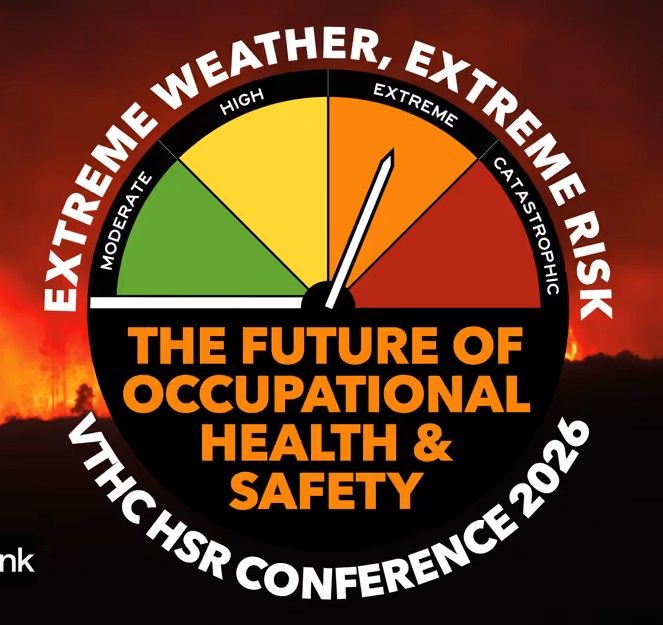
We are excited that the program has been released for the 2026 HSR Conference! The event is held across the state, with the Melbourne presentations being live streamed to four regional centres. This includes Bendigo, Morwell, Wangaratta and Ballarat. BeSafe is super excited to be hosting the Ballarat event! The conference is on Tuesday 27 th October and will kick off at 8.30am and run through to 2.45pm. It’s completely free and catered for, but you must register to attend at: VTHC HSR Conference 2026 Don’t forget that HSR’s have an entitlement to attend this course, as it is WorkSafe Victoria approved under Section 69. Numbers are limited, so register as soon as possible so you don’t miss out! Here is what to expect on the day: The Conference topic “Extreme Weather, Extreme Risk: The Future of Occupational Health and Safety”: How extreme weather is changing workplace health and safety, the new risks workers face, and how HSRs can use their rights and powers to prevent harm. The Program 7.45- 8.30am Arrive and register 8.30 – 10am SESSION 1 Opening speakers: VTHC Secretary Luke Hilakari, WorkSafe Minister Steve Dimopoulos MP and WorkSafe CEO Cathy Henderson Presentation: Extreme Heat: combined presentation between HSRs and Dr Andrew Ireland 10:00am - 10:30am Morning tea 10:30am - 11:15am SESSION 2 Presentation: Climate-driven natural disasters: combined presentation between HSRs and Dr Andrew Watkins Q&A 11:25am - 12:15pm BREAKOUT SESSION 1: Debrief and reflections 12:15pm – 1:15pm Lunch 1:15pm – 2:45pm BREAKOUT SESSION 2: Myth busters, problem solving and campaigns activities 2:45pm Conference evaluation and certificate collection For more information, take a look at: H&S Month 2026: Victorian HSR Conference | WorkSafe Victoria HSR conference 2026 - OHS Reps